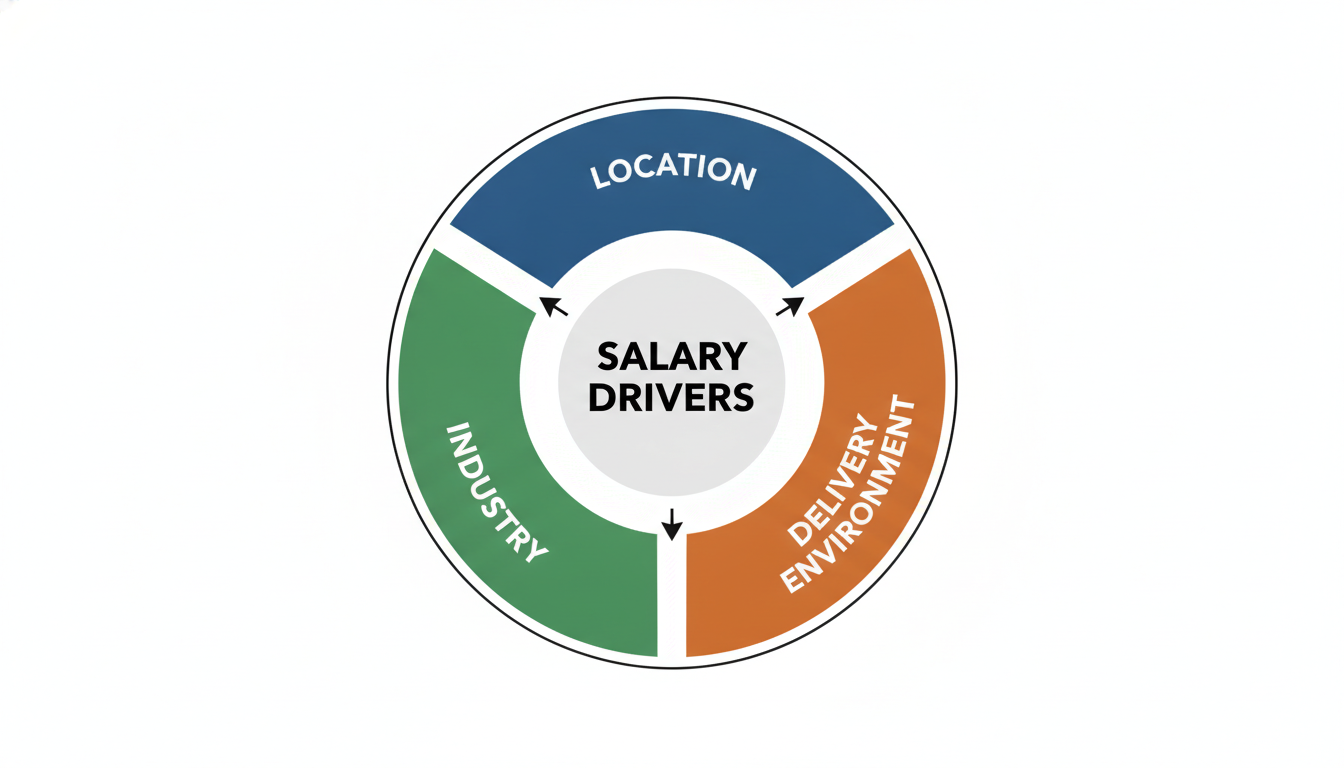
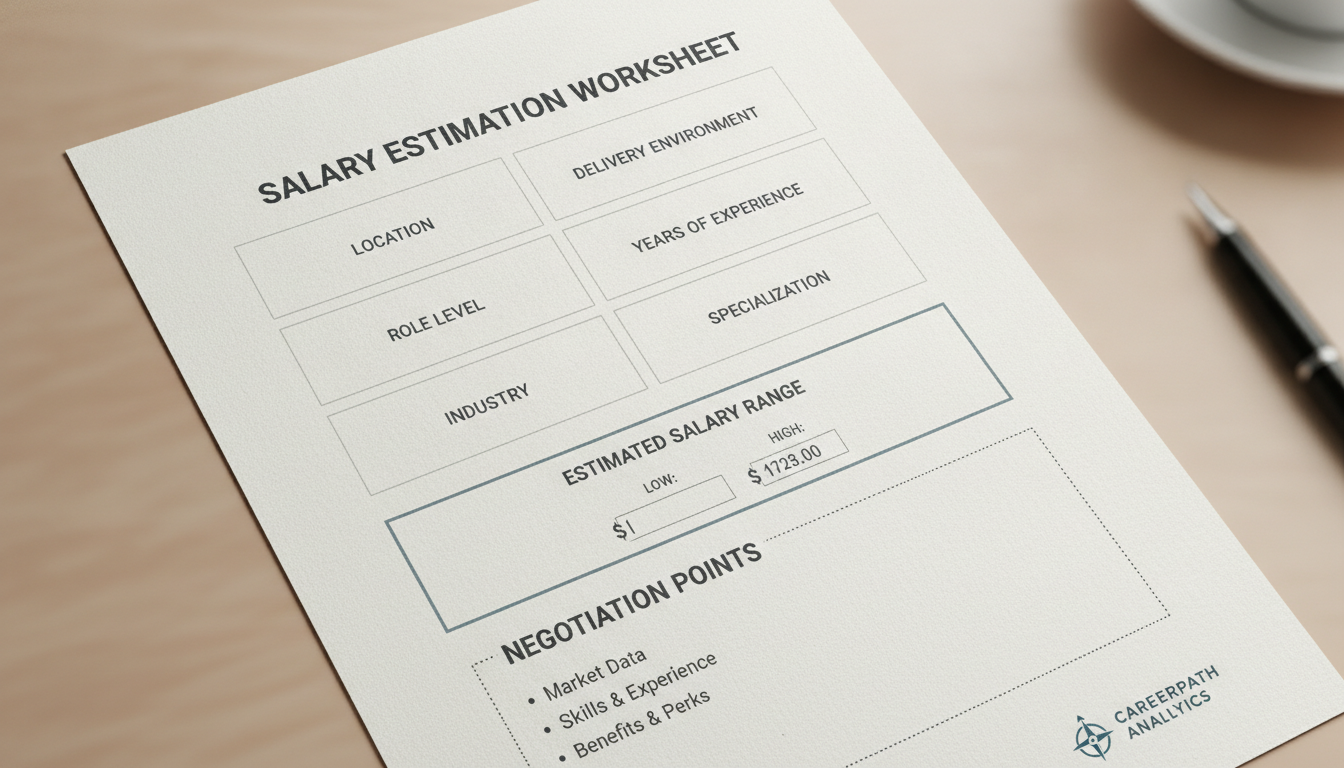
Next, instead of guessing based on the PMP alone, focus on the three factors that most often explain why two similar project managers get very different offers: where the job is anchored, what the company does, and how delivery happens day to day.
If you only do one thing, separate “base pay” from “total compensation” when you compare these drivers. A role in a high-cost city may look bigger on paper, while a remote role may trade cash for flexibility, travel limits, or a narrower customer-facing scope.
1) Location (cost of living and remote policy)
Location is not just geography, it is the pay band your employer uses. The same title can land in different ranges depending on whether the role is tied to a specific metro area, split across regions, or truly remote.
Common tradeoff: it works best when you can access a higher pay band without increasing your living costs, and it fails when the role is “remote” but still priced like a low-cost region.
Quick checks to make before you negotiate:
Ask if compensation is set by your home address, the office location, or a national band
Confirm travel expectations in writing (for example, 1 week per month vs quarterly)
Clarify if the role can switch to hybrid later, which often changes the pay band
2) Industry (especially regulated or high-risk work)
Industry drives pay because it changes risk, compliance load, and the cost of delays. Regulated environments usually require more documentation, audits, vendor controls, and stakeholder approvals, which raises the bar for planning and reporting.
A common mistake is treating “project manager” as a single market. Fix it by matching your resume to the industry’s pain points, like change control, validation, or procurement cycles.
Premium niches to watch in 2026 (often higher budgets and tighter deadlines):
Tech (product launches, cloud migrations, data programs)
Pharma and life sciences (validation, quality systems, regulated change)
Finance (risk, security, audit readiness)
Energy (safety, permitting, long timelines)
Large-scale infrastructure (multi-vendor delivery, public stakeholders)
3) Delivery environment (agile, hybrid, or large-program complexity)
Delivery environment is how the work runs: agile teams shipping in 2-week cycles, hybrid models balancing stage gates and sprints, or large programs coordinating multiple workstreams. More coordination, more dependencies, and more cross-functional decision-making usually increases compensation.
Here’s the catch: agile or hybrid contexts pay a premium when you are accountable for outcomes (scope tradeoffs, release planning, metrics), but not when you are only tracking tasks.
If you’re short on time, do this to position yourself for higher-paying delivery contexts:
Add 2 to 3 bullets that show scale (team size, budget range, number of workstreams)
Name the delivery model you ran (Scrum, Kanban, hybrid stage-gate)
Show one before/after result (for example, cycle time improved, fewer change requests, smoother release readiness)